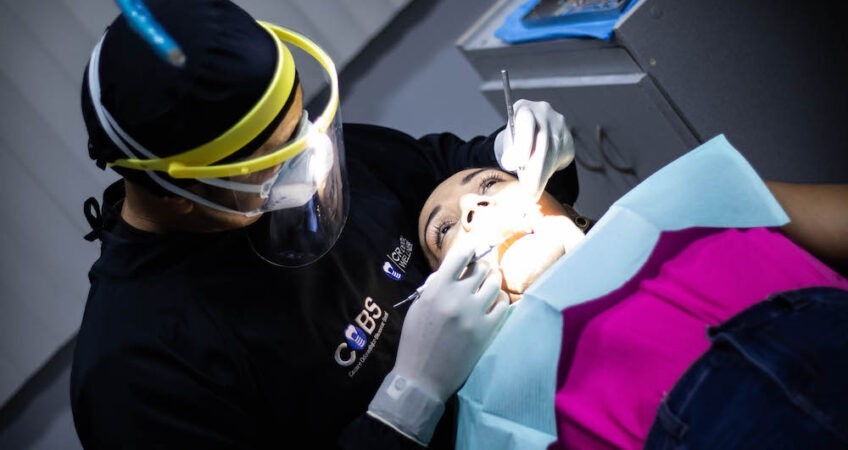
Nowadays, cosmetic dentistry has taken over the world. In the aesthetic society we live in, having a treatment that changes and restores your smile is nothing short of a must. If you are not satisfied with your current smile, want to look younger, or have some minor issues that compromise the overall condition of your smile; a smile design can change that.
What is a smile design?
Smile design is a cosmetic dental treatment that creates smile profiles combining the functionality and aesthetics of dentistry. It helps restore stained teeth, the presence of gaps between them, and even more issues like cracks or misshapen teeth. It is important to understand that during a smile design, the dentist performs a series of cosmetic treatments to change your smile forever. Some of these treatments may include multiple restorative alternatives to achieve the expected final results. Additionally, before proceeding with treatments, the dentist must diagnose and address each oral problem. Among the multiple procedures within a smile design, you may need porcelain or resin veneers, crowns, cosmetic gum surgery, whitening, implants, and others. The indication of a particular procedure depends on each case and the initial condition.
How is a smile design done?
To achieve an amazing smile, the dentist must perform a careful and thorough analysis, along with a personalized evaluation, planning, and approach. Each case is different. Therefore, your smile design will be unique, aiming to obtain the best possible results. In the process, the dentist may require several photographs, plaster models of your mouth and teeth, X-rays, and any other information necessary to ensure the best smile. An essential part of the smile design process is the smile line configuration. Thanks to current technological advances and photographic studies, the clinician can analyze your profile and determine where your teeth should be and how. As a result, the smile design creates a beautiful smile that harmonizes with the rest of your face and body by changing the shape, width, length, and color of your teeth. Most smile designs require porcelain veneers to bring the teeth's anatomy to the desired state. Additionally, if the gum interferes with your smile or shows too much, you may need a simple gum procedure to reshape the gums. Unfortunately, more complicated cases generally require multiple internal procedures and restorations such as dental crowns, the placement of dental implants, and even some composite reconstructions. These procedures would allow the dentist to have a solid structure for your future smile.
How long does it take?
It depends on the complexity of your case and the initial condition of your teeth and gums. As expected, simple and minor changes in shape and small gaps will require less time than a case with crooked and missing teeth. However, with proper planning and scheduling, the dentist is capable of achieving great results, maximizing progress at each appointment.