3D Technology for Diagnosis in Dentistry
Dental Technology January 15, 2026 5 min read

3D Technology for Diagnosis in Dentistry

Dental technology has come a long way by offering cutting-edge diagnostic and therapeutic technologies to dentists around the world. Gone are the days when dentists relied solely on two-dimensional X-rays or waited days before their patients' restorations arrived from the laboratory.
Thanks to 3D technology, dental treatment today is much less time-consuming, more comfortable, and most importantly, more aesthetic than ever! This article explains how 3D printing technology has revolutionized dentistry and how it will benefit dental patients.
The 3D Revolution in Dentistry

3D X-Rays
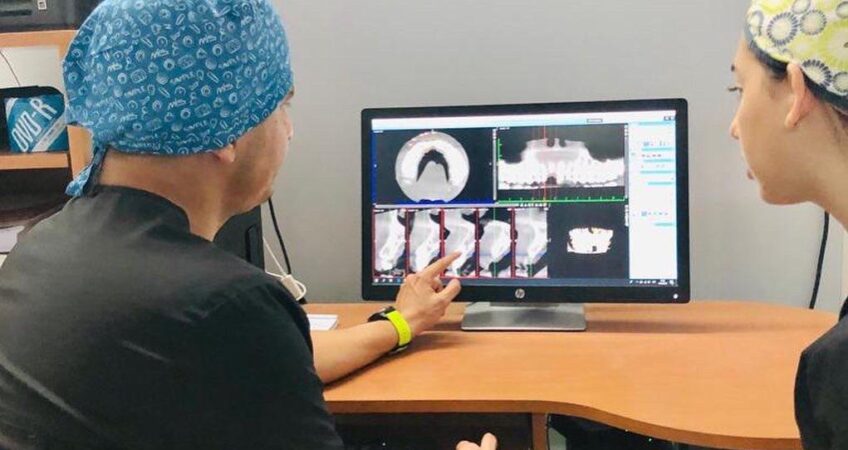
  • Diagnosis and treatment planning: many dentists in the U.S. have already said goodbye to old 2D X-ray machines. 3D X-ray technology allows faster processing of X-ray images and provides dentists with information that helps them make better treatment plans for their patients.
  • Implant dentistry: Cone Beam CT (CBCT) technology has allowed dentists to see a three-dimensional image of the bone structures where implants need to be inserted. Dentists can use this technology to precisely determine the quality and density of the jawbone and visualize any anatomically essential structures nearby.
  • Diagnosis of oral diseases: early diagnosis of lesions or swellings in the deeper parts of the face or neck was a challenging task when dentists had to rely on conventional X-ray images. With 3D X-rays, dentists can now visualize even the smallest inflammations or pathologies, and treat them, long before they cause permanent damage.
3D Digital Impressions

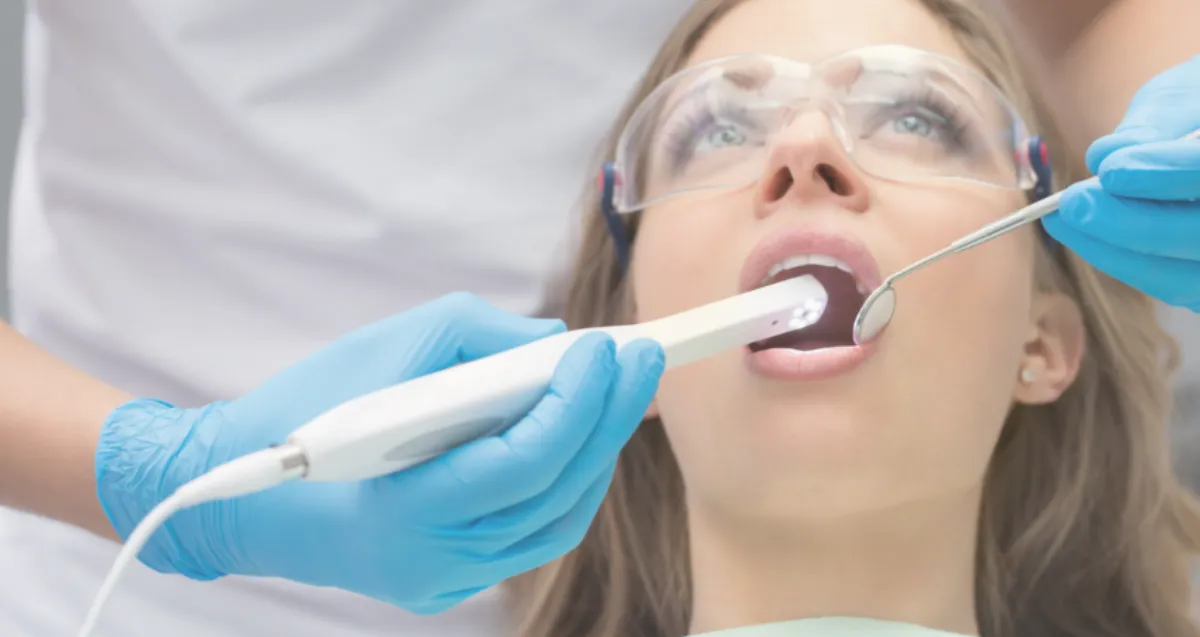
Conventionally, dentists had to take physical impressions of patients, which were then sent to the laboratory for the fabrication of the required prosthesis. Those days are over, says the American Dental Association. Your dentist can now take 3D digital impressions of your teeth using a high-resolution intraoral scanner. Then, your dentist simply enters these digital impressions into software and designs the desired prosthesis, before manufacturing it with a 3D printer.

3D Printing
  • Dental restorations: Cone Beam CT (CBCT) technology has allowed dentists to see a three-dimensional image of the bone structures where implants need to be inserted. Dentists can use this technology to precisely determine the quality and density of the jawbone and visualize any anatomically essential structures nearby.
  • Implant surgical guides: Dentists often use surgical guides to ensure that implants are inserted in the precise, pre-planned location. These surgical guides were previously manufactured in dental laboratories, but not anymore. Now these surgical guides can be 3D printed chairside, which are not only more accurate but also require less preparation time.
Share:
Tecnología 3D para el Diagnóstico en Odontología
Tecnología Dental 15 Enero 2026 5 min lectura

Tecnología 3D para el Diagnóstico en Odontología

La tecnología dental ha recorrido un largo camino al ofrecer tecnologías diagnósticas y terapéuticas de vanguardia a dentistas de todo el mundo. Atrás quedaron los días en que los dentistas confiaban solo en radiografías bidimensionales o esperaban días antes de que las restauraciones de sus pacientes llegaran del laboratorio.
Gracias a la tecnología 3D, el tratamiento dental hoy en día es mucho menos lento, más cómodo y, lo que es más importante, ¡más estético que nunca! Este artículo explica cómo la tecnología de impresión 3D ha revolucionado la odontología y cómo beneficiará a los pacientes dentales.

La revolución 3D en odontología

Rayos X 3D
  • Diagnóstico y planificación del tratamiento: muchos dentistas en los EE. UU. Ya se han despedido de las antiguas máquinas de rayos X 2D. La tecnología de rayos X 3D permite un procesamiento más rápido de las imágenes de rayos X y ofrece información a los dentistas que les ayuda a hacer mejores planes de tratamiento diamantados para sus pacientes.
  • Odontología de implantes: la tecnología Cone Beam CT (CBCT) ha permitido a los dentistas ver una imagen tridimensional de las estructuras óseas donde deben insertarse los implantes. Los dentistas pueden utilizar esta tecnología para determinar con precisión la calidad y densidad de la mandíbula y visualizar cualquier estructura anatómicamente esencial que se encuentre cerca.
  • Diagnóstico de enfermedades bucales: el diagnóstico temprano de lesiones o hinchazones en las partes más profundas de la cara o el cuello fue una tarea desafiante cuando los dentistas tuvieron que confiar en imágenes de rayos X convencionales. Con las radiografías en 3D, los dentistas ahora pueden visualizar incluso las más pequeñas inflamaciones o patologías, y tratarlas, mucho antes de que causen daños permanentes.
Impresiones digitales 3D

Convencionalmente, los dentistas tenían que realizar impresiones físicas de los pacientes, que luego eran enviadas al laboratorio para la fabricación del proceso requerido. Esos días ya terminaron, dice la Asociación Dental Americana. Su dentista ahora puede realizar impresiones digitales en 3D de sus dientes utilizando un escáner intraoral de alta resolución. Luego, su dentista simplemente ingresará estas impresiones digitales en un software y diseñará la prótesis deseada, antes de fabricarla con una impresora 3D.

Impresión 3D
  • Restauraciones dentales: la tecnología Cone Beam CT (CBCT) ha permitido a los dentistas ver una imagen tridimensional de las estructuras óseas donde deben insertarse los implantes. Los dentistas pueden utilizar esta tecnología para determinar con precisión la calidad y densidad de la mandíbula y visualizar cualquier estructura anatómicamente esencial que se encuentre cerca.
  • Guías quirúrgicas de implantes: Los dentistas suelen utilizar guías quirúrgicas para asegurarse de que los implantes se inserten en la ubicación precisa y planificada previamente. Estas guías quirúrgicas se fabricaban anteriormente en los laboratorios dentales, pero ya no. Ahora estas guías quirúrgicas se pueden imprimir en 3D en el sillón dental, que no solo son más precisas sino que también requieren menos tiempo para prepararse.
Compartir: