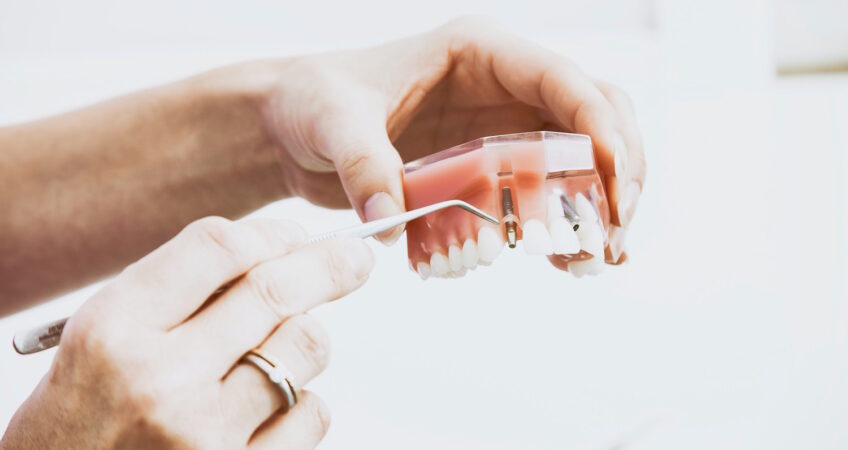
Traditionally, moving teeth to fix a crooked smile involved undergoing treatment with metal wires and braces attached to the teeth.
Although this method is completely reliable and can produce optimal results, it has many drawbacks, such as discomfort and undesirable aesthetics throughout the treatment. However, the development of clear aligners has offered a solution to the common problems of traditional orthodontic treatments, making them an excellent alternative for fixing smiles.
What are clear aligners?
Clear aligners, most commonly known as Invisalign after the company that first designed them, are an orthodontic system that uses custom trays to move teeth instead of braces.
The concept behind this system was created by Herald Dean Kesling in 1945. However, it was not until 1997 that the company Align Technology created the first Invisalign with the help of CAD/CAM technology.
How do they work?
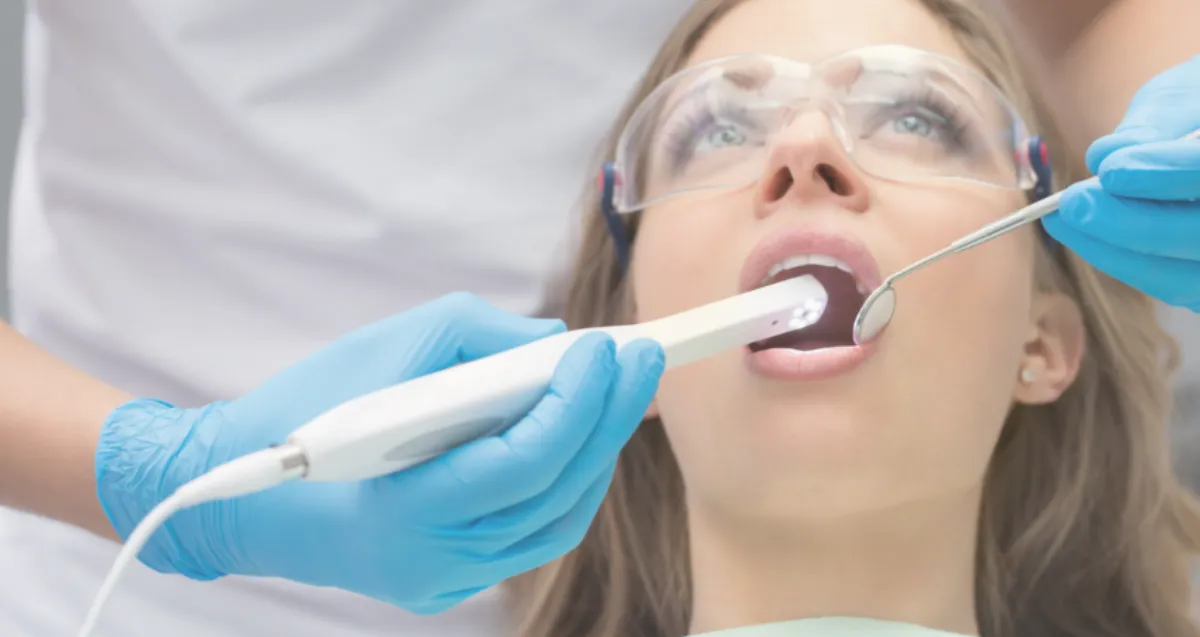
The concept is the same as with traditional braces. Constant pressure is applied to the teeth to move them to the desired position. To do this, a model of the mouth must be obtained using an intraoral scanner.
Subsequently, this 3D model is digitally modified to simulate the teeth in a better position. A tray is created in the shape of the modified model.
Since the position of your teeth will not match the tray, placing it will apply the necessary pressure to move the teeth until they are correctly set. This process is repeated several times using different trays until all teeth finally reach the desired position.
Generally, each tray should be replaced every 2 weeks. Replacing them earlier can interfere with the treatment plan.
Therefore, it is vital to avoid replacing them before this time, even if they already feel loose.
Advantages of Clear Aligners
There are many benefits of using clear aligners instead of traditional braces:
- Comfort: since there are no sharp edges and all tray surfaces are smooth, they will not damage the lips or cause ulcers.
- Aesthetics: clear aligner trays are nearly invisible. Therefore, most people will not notice you are wearing them, making the treatment effective and discreet.
- Hygiene: one of the biggest problems with braces is the difficulty of cleaning teeth properly. Additionally, the many parts help food get stuck and cause gum disease. However, clear aligner trays can be easily removed to brush your teeth and floss normally.
- Short dental appointments: once the planning is done and you receive your set of trays, the next check-up appointments should be quick since the dentist will only evaluate the case's progress and will not need to make adjustments as they would with braces.
Clear aligners have become an excellent solution for all those looking to fix the position of their teeth. Whether a minor movement is needed to change the appearance or a larger one to treat bite imbalance, clear aligners offer a solution to most of your problems.
References
Galan-Lopez, L., Barcia-Gonzalez, J., & Plasencia, E.
(2019). A systematic review of the accuracy and efficiency
of dental movements with invisalign®. The Korean Journal
of Orthodontics, 49(3), 140.
Larson, J. (2021, January 7). Does invisalign work? Pros,
cons, effectiveness. Healthline.
Lou, T., & Mair, A. (2020, September 14). An historical
overview of clear aligner therapy the evolution of clear
aligners. Oral Health Group.
Papadimitriou, A., Mousoulea, S., Gkantidis, N., &
Kloukos, D. (2018). Clinical effectiveness of invisalign®
orthodontic treatment: A systematic review. Progress in
Orthodontics, 19(1).